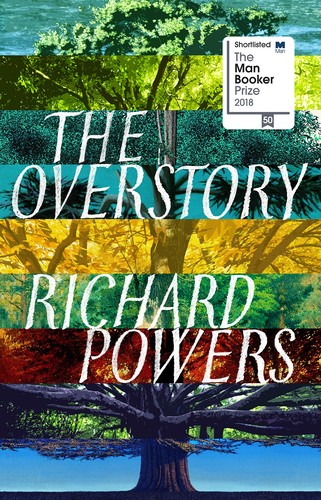
Full disclosure, it took me almost 80 pages to figure out this was going to be nine separate people’s stories eventually braiding together, not nine short stories in a trench coat pretending to be a novel. Once that clicked, the whole thing rearranged itself in my head and I couldn’t put it down the same way.
Richard Powers is doing something I don’t think I’ve seen a novel actually pull off before, which is making the trees the real protagonist without ever giving one of them a point-of-view chapter. Every human plot, the artist, the programmer, the paralyzed war vet, the activists, is basically a delivery mechanism for getting you to care about something with no dialogue and a timescale that makes human lifespans look like a rounding error. I found a paired book pairing accidentally, I’d been reading Peter Wohlleben’s The Hidden Life of Trees around the same time without planning it, and the two of them talking to each other in my head made the fiction hit differently than it would have cold. The nonfiction gave me the actual science of mycorrhizal networks and chemical signaling between trees, and then the novel used that science as load-bearing plot logic instead of decoration.
The activist storyline in the second half is the part that’ll stick with you longest, and it’s also the part I have the most mixed feelings about, the tree-sit sequences are genuinely tense and well built, but Powers pushes the moral argument hard enough in places that I felt the seams of the author’s own position showing through the characters. I didn’t mind it, I just noticed it, which isn’t always true of a book this long.
Five stars, and it’s rare I give a 500-plus page book that without at least one complaint about pacing. This one earned every chapter.