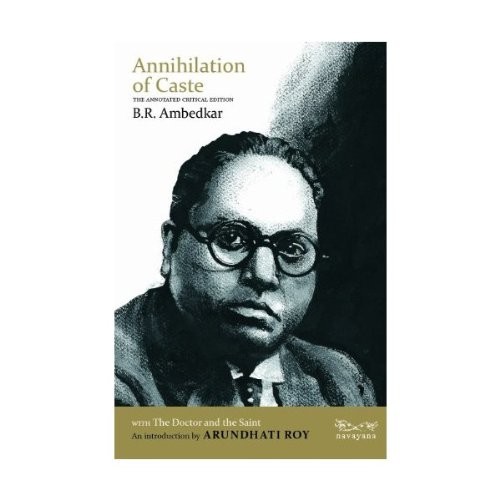
I want to say up front, this is not a book, not really. It’s a speech Ambedkar wrote for a 1936 conference of Hindu reformers who’d invited him to speak, and then read the draft ahead of time and cancelled the whole thing rather than let him give it. So he published it himself. That fact alone got me before I’d read a page of the actual argument, because you don’t often get to hold a piece of writing that was too much for the room it was written for.
The edition I read is the Verso one, which is really two books stapled together, Arundhati Roy’s essay “The Doctor and the Saint” running about 120 pages before you even get to Ambedkar’s text, and I went in wary of that, worried the introduction would swallow the thing it was introducing. It doesn’t. Roy is comparing Gandhi and Ambedkar’s actual records on caste, not just their reputations, and it’s a genuinely brutal piece of writing, methodical in a way that made me trust it more the longer it went, not less.
The speech itself, once you get to it, isn’t really arguing against individual prejudice, it’s arguing that caste can’t be reformed piece by piece because the whole religious structure underneath it is built to regenerate the thing you just reformed away. I found that reframing genuinely useful outside the specific Indian context too, the idea that you can pass all the individual laws you want and the system rebuilds itself around them if you never touch the foundation.
Rating this a book feels a little beside the point, honestly, it’s closer to a document you sit with. I split it into three sittings because I kept having to put it down and think, which for me is usually the sign a book earned its rating rather than a knock against it.