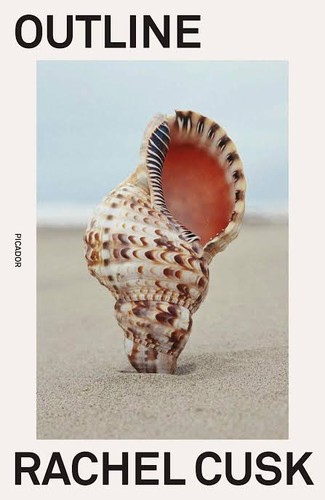
I went in not really knowing what this book was going to do, and about forty pages later realized it was doing almost nothing, in the plot sense, and that this was the point rather than a problem. Faye flies to Athens to teach a summer writing course and has a string of conversations, her seatmate on the plane, fellow teachers, students, and the novel is just those conversations, mostly other people’s confessions, with Faye herself staying almost entirely offscreen as a person.
Someone described this online as being like spying on a writer auditioning characters for a future book, and I can’t improve on that, it’s exactly right, Cusk interviews these people the way a novelist would and just lets them tell her their emotionally loaded stories without dramatizing them further. I found myself highlighting sentences constantly, not for plot reasons since there basically is none, but because the prose kept landing lines I wanted in my pocket, one reader put it that way and I felt that exact thing reading on my kindle, going back afterward to reread passages I’d marked.
The narrator being a near-total cipher is either going to work for you or actively frustrate you, and I went back and forth. There were stretches, especially with her writing students, where the conversations felt alive and specific, and stretches with some of the older interlocutors that read as slightly repetitive, similar rhythms of self-justification circling the same territory. I think that’s partly deliberate, midlife disappointment does repeat itself, but it cost the book a little momentum for me in the second half.
Four stars, not five, mostly because I think this book benefits from being read slower than I read it, in one fairly greedy weekend. I suspect a reread in a year does more for it than a second read of most novels would.