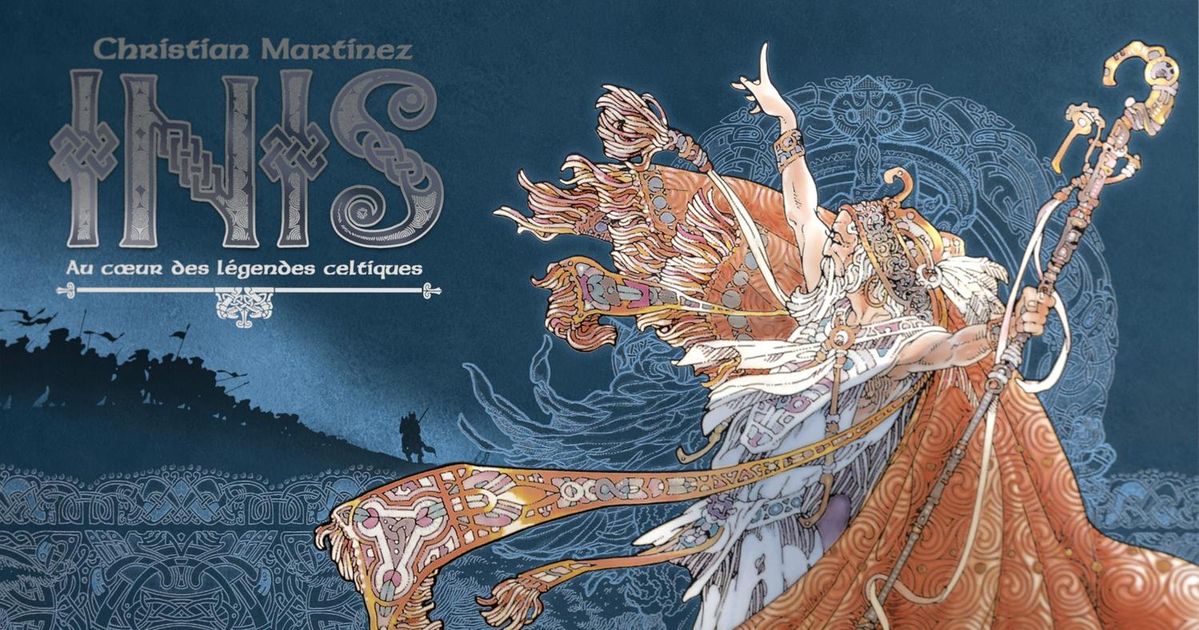
I want to talk about the last round of Inis before I talk about anything else, because it’s the thing that sold me on this game after a middling first play. Every session I’ve had follows the same shape, everyone quietly, thoughtfully building themselves up, land here, deeds there, epic tales tucked away, and then the win-condition math clicks for someone and the whole table erupts at once, alliances flipping, combat resolving fast, the game somehow ending in an extremely satisfying chaotic mess. That’s not a bug, that’s the design working exactly as intended.
The card drafting is the part that took our group longest to appreciate, you can return drafted cards to the pool and take something else in response to what’s revealed later in the draft, which sounds fiddly on paper and turns out to be the tensest ten minutes of the whole play once you understand it. Combat resolves fast, which I actively appreciate, this is a “dudes on a map” game that refuses to let combat become the bottleneck the way a lot of area control games do.
Two-player and four-player feel like genuinely different games, at four you get real alliance-and-betrayal dynamics that just aren’t available at two, and it took us three full plays before the emergent depth actually seized hold, that warm click where everyone stops treating cards as a checklist and starts reading the table. Downtime between turns can stretch when someone’s calculating a clash they don’t want to lose, and setup with all the territory tiles and citadels takes a genuine slice of the evening, worth knowing before you commit a weeknight to it.
Five stars. The art has some inconsistency between illustrators card to card, which is my one real nitpick, but it never once got in the way of how good this plays.